Seascape Knit Trips
Monterey Bay Knitting Retreat
October 8-11, 2026
Join us for an unforgettable weekend in
the Monterey Peninsula
Immerse yourself in creativity, elevate your skills, and connect with fellow knitters against the stunning backdrop of the Pacific coastline.
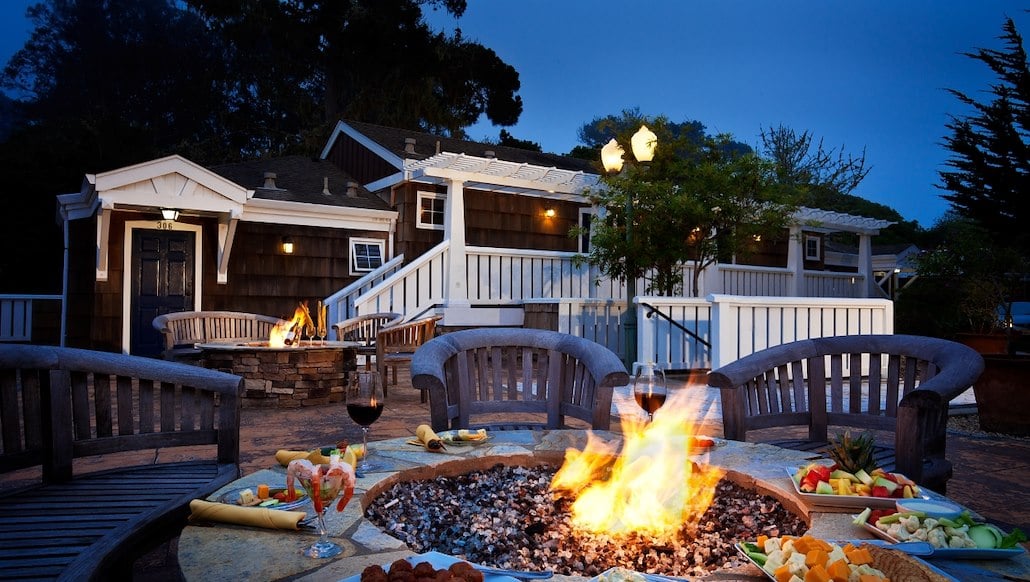
Our weekend retreat will take place at the Lighthouse Lodge and Cottages, a boutique inn nestled an easy walk from the stunning shoreline of Pacific Grove, California. Here you’ll find inviting accommodations and a range of amenities designed for a memorable stay. Knit in front of a crackling fire pit, relax in the outdoor hot tub, or take the short walk to visit coastal gems like the Point Pinos Lighthouse, Rocky Grove, the Monarch Butterfly Sanctuary, and the Great Tidepool.

Expand your knitting skills while immersing yourself in a community of knitters who share your passion for the craft!
You’ll take two classes from each of our renowned instructors, Bristol Ivy and Amy Snell, plus you’ll attend Bristol’s lecture, Meaning in Every Stitch: Adding Secret Messages to Your Knitting.
Take a peek at all the fun we had last year.
The retreat runs from 5:30pm Thursday until 3pm Sunday and includes all meals from Thursday dinner through Sunday lunch.
All retreaters will have an opportunity to have classes with both instructors and attend the keynote lecture on Sunday.
Enjoy our evening gatherings, popup shop, fabulous knitting bag filled with delights, and the beauty of sunsets, sea and sand.
You’ll also have a free afternoon to explore the wonders of the Monterey area on your own, or to follow along on a guided walk along the coast.
Price for the October 8-11, 2026 retreat is $1,195 USD.

Classes
Knitting Outside the Box with Bristol Ivy
One of the most interesting and best parts about knitting is the huge variety of patterns available. But where does the inspiration for those patterns come from?
In this class, we’ll talk about different forms of inspiration and different ways of thinking about knitting, and then explore methods and theory to bring those ideas to reality. This is a great class if you’re interested in designing, or just want to experiment with all the possibilities knitting has to offer! You should be comfortable with stitch patterns and have a willingness to experiment and play.
Homework: none
Materials:: A pencil and sketchbook, your favorite handknit item, scrap yarn and needles for swatching ideas, and any items/photos/tearsheets that inspire you

Harmonious Transitions with Amy Snell
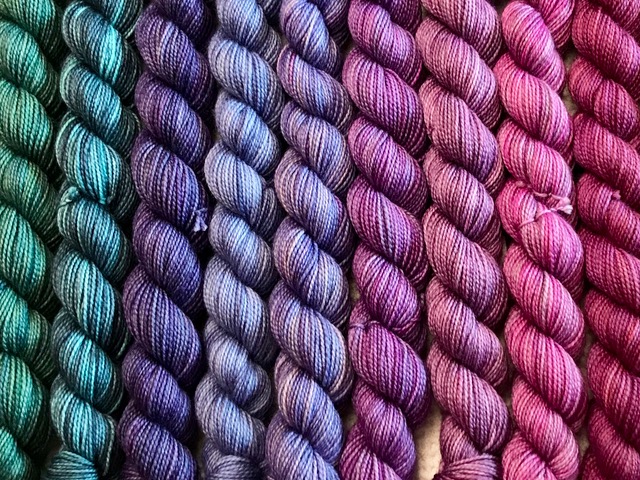
Hand-dyed, kettle-dyed, hand-spun yarns, and commercial yarns from different dye lots present us with a uniquely frustrating challenge: How do we make the transition within a project when yarns are close-but-not-exactly? In this class we’ll explore solutions for working with these yarns of desperation, and see how these same techniques apply beautifully to purposeful fades and gradients.
We’ll examine ways to balance, obscure, fade, or hide transitions between yarns that don’t match. We’ll discuss how different types of not-quite-matching yarns benefit from different techniques, and how to plan for the least obvious and most attractive placement of your transitions. We’ll practice micro-swatching to help us evaluate various transition options, and talk about the important steps that happen before we pick up the needles.
Homework: None
Materials: At least two balls or cakes of a not-quite-matching yarn, wound and ready to use. This can be hand-dyed, kettle-dyed, or solid yarn of the same color but different dye lots. Bring anything that is giving you headaches in this regard. Circular needles (any length, though 16-24′ is easiest) or dpns in the size you usually use for this yarn (single-point needles will not work for our exercises), scissors.
Drape and Fold with Bristol Ivy
Knitting is the creation of a piece of fabric that 95% of the time exists on a flat plane. However, most human bodies? Not so much. We have bumps and curves, changes in angle, places where fabric clings and places where fabric falls gracefully away. So what might happen if we embrace our three-dimensionality, using the angles and changes of direction on our bodies tohelp create the shape of the knitwear itself?
In this class we’ll explore fabric manipulation in several exercises, and then talk about how we can translate that to a human form.
Homework: none
Materials: pencil and paper


Fascinating Finishes: Embroidering Your Knits with Amy Snell
What’s better than a finished object? A fascinatingly-finished object! Learn to take your knits to the next level with these arresting embroidery finishes. Simple to execute but stunning to see, you’ll come away from this class with boundless ideas for really finishing off your knits by adding amazing touches to borders, hems, cuffs, or even entire pieces.
No harder than weaving in ends, but so much more satisfying — in this class you’ll learn and practice multiple embroidery finishes to elevate your hand-knits or even enliven store-bought knits. We’ll explore how the geometry of knitting and the geometry of embroidery work together to elevate existing stitchwork and highlight knitted motifs, beginning with basic stitches and advancing on to more complex combinations.
Homework: Knit and bind off a swatch using a smooth, light-colored, worsted-weight yarn in stockinette stitch, knit flat, that is approximately 6×6″. Alternatively, you may bring a similarly-sized piece of store-bought or machine knitting, as long as the color is light enough to see well and the stitches are large (5 or fewer stitches to the inch).
Materials: Your homework swatch, scraps of smooth yarn in a similar weight in various contrasting colors that are at least 4 yards long (or still on the ball), a tapestry needle big enough to work with your yarn scraps, a crochet hook in the 3.5mm to 4.5 mm range, scissors.
Instructors

Bristol Ivy
Bristol Ivy is a knitting designer, teacher, and author from Bangor, Maine. Her work has been published with PomPomMagazine, amirisu, Quince & Co., Making Magazine, and her own eponymous pat- tern line. She has taught at suchevents as Squam Art Workshops, Edinburgh Yarn Festival, and Vogue Knitting Live, as well as yarn shops worldwide.Her recent books, Knitting Outside the Box and Knitting Outside the Box: Drape and Fold, both with PomPom Press, explore her lifelong commitment to breaking rules and finding beauty in unexpected places. When not knitting, she’s sewing, running, watching far too many British murder mysteries, and baking a mean loaf of oatmeal honey bread.
Amy Snell
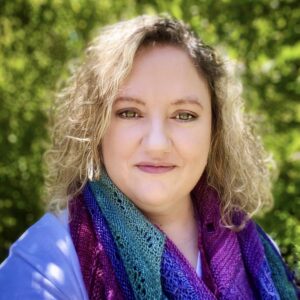
Amy Snell is a knitting instructor and designer with an eye for the unusual or unusually captivating. She enjoys teaching techniques and stitch patterns that bring color, contrast, geometry, and texture into knitting in new or interesting ways.
Whether teaching locally in the San Francisco Bay area or for knitting guilds and events nationwide, Amy loves to help other knitters explore new techniques and expand the way they think about their knitting. Her goal is to make complex concepts approachable for all knitters, while sharing tips that improve your process whether you’ve been knitting for several weeks or several decades.
Retreat Registration is Closed. Please plan to join us in October 2027!